Agneeswarar Temple, Tirukkanjanur
Location
Tiru-Kanjanur
Deity
Agneeswarar
Female Deity
Karpakambal
Pathikam
Tirunavukkarasar - 1
Gallery – Agneeswarar Temple, Tirukanjanur
How to Reach
This Shiva temple is located on the Kumbakonam–Mayiladuthurai route and can be reached via Tirumangalakudi from Aduthurai. The temple is situated about 3 km from Suryanar Kovil, 5 km from Aduthurai, and approximately 20 km from Mayiladuthurai. Regular bus services are available from Aduthurai, Kumbakonam, and Mayiladuthurai, making the temple easily accessible to devotees. This temple is one of the renowned Navagraha temples of Tamil Nadu and is associated with Sukran (Venus), the planetary deity representing prosperity, beauty, and marital harmony.
Temple Address
Kanjanur
Kanjanur Post
Via Thugili
Thiruvidaimarudur Taluk
Thanjavur District
PIN – 609804
Temple Hours
Morning : 7:00 - 11:00
Evening : 4:00 - 6:00
Nearby Paadal Petra Shiva Temples
Temple Specialities
- Of the nine Navagraha temples, this temple is especially associated with Shukran, the planetary deity for Venus.
- Birthplace of Hara-Dhutta Shivacharyar, who expounded the greatness of the Panchakshara mantra.
- Birthplace of Mana-Kanchara Nayanar, one of the celebrated 63 Shaivite saints.
- Brahma was blessed here with the vision of the celestial wedding of Shiva and Parvathi.
- The place where Agni, the fire god, was relieved of his anemia.
- Sage Parasara was cured of his paranoia, and the curse of Chandra, the moon god, was also lifted at this sacred site.
- A place of pride where the stone Nandi adjacent to the Dwajasthambam ate grass.
Temple Layout
Entrance & Outer Enclosure
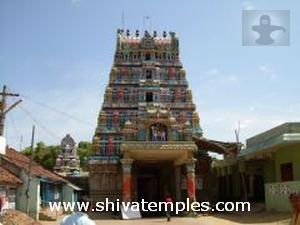
The Shiva temple at Kanjanur presents a magnificent sight, with its impressive five-tiered Rajagopuram towering above and beckoning devotees to enter. Upon passing through the ornate gateway, visitors embark on the traditional circumambulation of the outer prakaram. Completing the circuit, devotees proceed through another entrance leading to an inner enclosure. Flanking this threshold are the sannidhis dedicated to Vinayaka and Viswanathar. Adjacent to these sanctums lies the sannidhi of the female consort deity.
Vavval Nethi Mandap & Sacred Tree
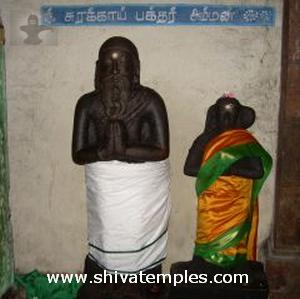
As one makes their way towards the central sanctum, they encounter a captivating enclosure known as the Vavval Nethi Mandap (the bat-forehead hall). This unique structure houses additional sannidhis for Vinayaka, Mayura Subramanya, and Mahalakshmi. Beneath the canopy of the sacred Purasu (Palasa) tree within the complex stands the Linga of Agneeswarar. Nearby are the idols of Mana-kancharar and Kali-kaamar, along with the idol of the Suraikkai Bhakthar (ash gourd devotee) and his devoted spouse.
Maha Mandap & Mukthi Mandap
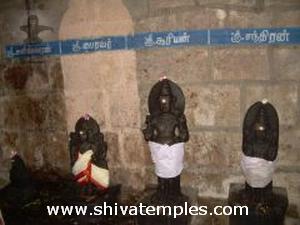
The Maha Mandap houses sannidhis for Bhairavar, Surya, Sani, Chandra, the Navagrahas, and the four principal Nayanmars. Of particular significance is the Nataraja Sabha within the mandap, where Nataraja is depicted in the rare Mukthi Thandava form accompanied by his consort Shivakami – the very dance form that was revealed to Sage Parasara. This unique portrayal lends the Maha Mandap its alternate name, the Mukthi Mandap.
Main Sanctum
The presiding deity Agneeswarar resides in an east-facing sanctum, manifesting as a self-emanated Swayambhu Linga with a distinctively tall and elongated bana or shaft. This temple is celebrated for its three-fold glories – the divine Murthy, the sacred Sthalam, and the holy Theertham. Agneeswarar was worshipped here by Mahavishnu, Brahma, Chandra, and the legendary devotee Kamsa Pandiyan. A unique feature of this temple is that the Goddess resides in the right half of the deity, a divine form that manifested when Shiva and Parvathi appeared before Brahma in their celestial wedding form, known as Tirumana Kolam.
Sthala Puranam
Sukracharya and the Vamana Avataram
The Sthala Puranam of Kanjanur narrates a compelling tale from the Vamana Avataram. Vishnu appeared as the diminutive boy Vamana and approached the mighty King Bali, requesting three steps of land. Sukracharya, the wise guru of the asuras, suspected the true identity of this child and warned Bali against the gift – but the noble king, bound by his principles of generosity, disregarded the counsel. Determined to prevent the donation, Sukracharya assumed the form of a tiny bee and concealed himself within the spout of Bali's kamandalu, so that water could not flow to seal the gift. Undeterred, Vamana employed a blade of darbha grass to pierce the disguised Sukracharya, inflicting a wound that cost the guru one of his eyes and forced him to emerge. With the obstruction removed, Bali granted Vamana his three steps of land, whereupon Vamana revealed his cosmic form, striding across earth and heaven.
Sukracharya, enraged by Vishnu's actions, invoked a potent curse against the deity. Seeking solace and redemption, Vishnu journeyed to the sacred site of Kanjanur and earnestly prayed to Lord Shiva for deliverance. Moved by Vishnu's devotion, Shiva not only granted him absolution but also made a solemn vow to reside forever at Kanjanur, extending his divine grace to all who come seeking Shukran's favour.
Temple Legends
The Ash Gourd Devotee
According to legend, there was once a humble devotee who made his living by cultivating and selling ash gourds. One day, after a busy market session, he returned home with only one gourd remaining, intending to save its seeds for the next crop. On that very day, Lord Shiva arrived at his door disguised as a weary traveller seeking food and shelter. The devotee was faced with a dilemma – religious custom held it improper to serve a guest a dish made from ash gourd, yet this single gourd and its seeds were all he had. At this critical moment, a divine disembodied voice – an asareeri – spoke, instructing him to cut the gourd in two: one half to serve the guest, and the other to save the seeds. Reassured by this divine guidance, the devotee joyfully offered his humble hospitality to the Lord.
The Story of Hara-Dhutta
Sudharshanan, a boy born into a Vaishnava family in Kanchanur, was a devoted Shaivite despite his family's religious affiliation. Each day he would embark on a pilgrimage to nearby Shiva temples – Tirumanthurai, Tirumangalakudi, Tirukurangaduthurai, Tiruvavaduthurai, Tiruvalangadu, and Tirukodikka – always returning to Kanchanur in time for the Artha Jama puja. The people of Kanchanur, displeased with a member of a Vaishnava family showing such devotion to Shiva, demanded that Sudharshanan sit on a scorching iron chair as a test of faith. To their astonishment, he remained unharmed, calmly reciting the Panchakshara mantra. Dakshinamurthy, a form of Shiva as the divine teacher, appeared and bestowed upon him the name Hara-dhutta, meaning “one held by Shiva.” The temple at Kanchanur depicts this moment: Dakshinamurthy alongside Hara-dhutta, immortalising the scene of the divine guru imparting the Panchakshara upadesha. This portrayal is also found in the Mahavishnu temple at Kanchanur, which additionally houses shrines for Agneeswarar and Karpagambal.
Agneeswarar Accepts a Humble Meal
A wealthy man would make daily offerings of food (Neivethyam) to Agneeswarar, and each night the Lord would appear in his dreams consuming the meal. One evening the customary dream did not appear. Upon investigation, the devotee discovered that Shiva, in the guise of an impoverished man, had visited Hara-Dhutta's humble abode and partaken of a meal there – his hunger thus satisfied, he had no need of the wealthy man's offerings that night. This revelation illuminated the true greatness of Hara-Dhutta, whose simple offerings born of pure devotion had proved more meaningful. The temple commemorates this legend with an idol depicting Hara-Dhutta alongside Shiva in his impoverished human form. At the entrance to Kanjanur, beneath a majestic banyan tree, stands a separate shrine to Hara-Dhutta, showing him engaged in performing a Shiva puja.
More Gallery – Agneeswarar Temple, Tirukanjanur


