Koteeswarar Temple, Tirukkodikka
Location
Tiru-Kodikka
Deity
Koteeswarar
Female Deity
Vadivambikai, Thiripurasundari
Pathikam
Tirunavukkarasar - 3, Sambandar - 1
Gallery – Tirukoteeswarar Temple, Tirukodikka

How to Reach
This Shiva temple is situated on the Kumbakonam – Mayiladuthurai route, reachable via Kuthalam and Kadiramanagalam. An alternate route is via Aduthurai, which lies close to the temple. It can also be reached from Tiruvavaduthurai, a well-known landmark on the same highway corridor.
Temple Address
Thirukkodikaval
Thirukkodikaval Post
Via Narasinganpettai
Thiruvidaimarudur Taluk
Thanjavur District
PIN – 609802
Temple Hours
Morning : 7:00 - 12:30
Evening : 4:00 - 8:30
Nearby Paadal Petra Shiva Temples
Temple Specialities
- The planetary god Sani, associated with Saturn, and Yama, the formidable god of death, face each other in opposite sannidhis within this temple.
- Likewise, Chitragupta, the celestial record-keeper, and the legendary Sage Durvasa also occupy opposing sannidhis.
- River Kaveri defies convention by flowing from south to north at this sacred site. Bathing in its waters in the early hours of Sundays during the Tamil month of Karthigai is believed to bestow immense blessings and spiritual purification.
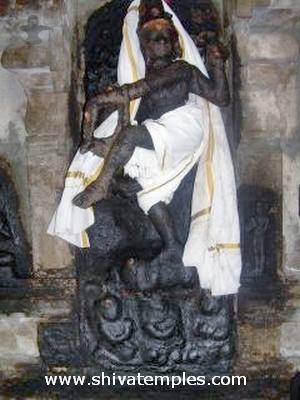
- Sani is venerated in his youthful form as Bala-Sani, depicted with a Shiva Linga adorning his head, symbolising the convergence of planetary influence and divine energy.
- The temple's rich history is intertwined with the patronage of the illustrious Chola queen Sembian Madevi, who oversaw the reconstruction of the temple in granite, elevating it from its humble brick origins.
- This sacred site is celebrated as the place where three crore mantras chanted by celestial beings were pronounced before the deity with meticulous precision, securing their liberation from a curse.
- Similarly, three crore devas attained gyana mukthi, or spiritual enlightenment, through devoted worship at this temple.
- The sanctity of this place is considered on par with the divine form of Shiva himself. Meditation, homa, and japa performed within its precincts are believed to yield threefold benefits.
Temple Layout
Entrance & Outer Enclosure
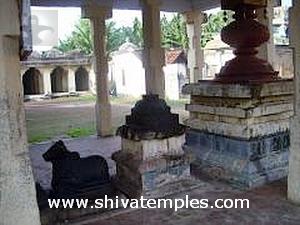
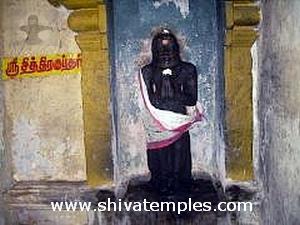
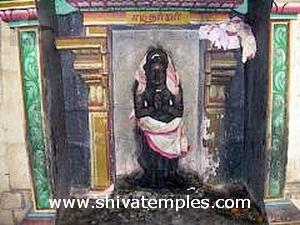
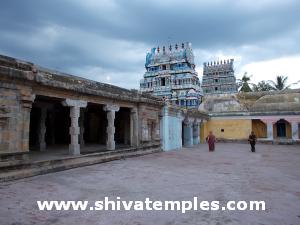
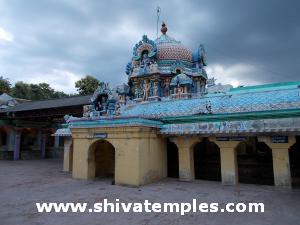
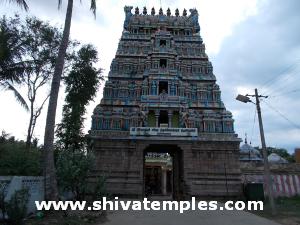
The Tirukoteeswar Shiva Temple faces the rising sun in the east and reveals itself through its magnificent five-tiered Rajagopuram gateway. Upon passing through this threshold, visitors are greeted by the balipeetam altar, Nandi, the towering Dwajasthambam flagstaff, and a small sannidhi for Vinayaka nestled beneath it. Within the front enclosure, to the right, stands the sannidhi of the consort deity Vadivambikai in a graceful standing posture. Circumambulating the inner prakaram, devotees encounter sannidhis for ‘Karayerum’ Vinayaka, Subramanya, several Linga idols, Gajalakshmi, JeshtaDevi, KalaBhairava, Surya, Chandra, Sani, and Sage Durvasa. The Goshta murthas include Narthana Vinayaka, Nataraja, Dakshinamurthy, Lingothbhava, Brahma, and Goddess Durga. After completing the pradakshina, worshippers enter the inner sanctum, first paying respects to the guardian deities Dwara Ganapathy and Balasubramaniya. In a distinctive feature unique to this temple, Yamadharma and Chitragupta are found on either side of the central pathway leading to the sanctum. The presiding deity Tirukoteeswar is then revealed — a magnificent swayambhu linga with a tall bana rising from a perfectly square avudayar.
Western & Northern Prakaram
The western side of the prakaram features Nagalingam, Kasi Viswanathar, Visalakshi, and Manon-mani Ambal. Further along is a striking sannidhi of Muruga with six faces and twelve hands, flanked by Valli and Deivanai, seated atop a great peacock. Next are four Vedha Lingas named after the four Vedas – Rik, Yajur, Sama, and Atharvana – followed by a gracefully seated Gajalakshmi. At the western end stands an intriguing family grouping of Sani with his consort Jeshtadevi and their children Maandhi and Maandha, the entire composition remarkably carved from a single stone. Transitioning to the northern side, visitors encounter the sacred sthala vruksham, a bamboo tree, the sannidhis of Ashta-Bhuja Durga and Chandikeshwarar, a pushkarani (sacred well), and a small dedicated sannidhi for Brahma.
Sculptural Splendour
The Tirukoteeswar temple is a magnificent testament to the artistry of its creators, with intricate sculptures adorning its pathways and walls. Visitors are treated to vivid portrayals of Lord Shiva’s 64 tiruvilayadal (divine sports), celestial beings such as Kamadhenu and the Kalpavriksha, and sculpted women playing 22 different musical instruments at the entrance gateway, alongside soldiers mounted on horses and elephants. The southern outer wall showcases a dynamic Nataraja flanked by Shivakami and Karaikal Ammaiyar in her ghostly form, accompanied by three ganas. Other notable figures include Bhikshadanar, the Mohini avatar of Vishnu, Sage Agastya, and Dakshinamurthy. The vimana features Bhikshadanar as Akora Thandavamurthy with eight arms, and Lord Vishnu. The western sanctum wall depicts Sages Kutsa and Vasishta on either side of Vishnu, while the northern wall features Sage Gautama, Brahma, Sage Kashyapa, Ashta-Bhuja Durga, and Ardhanarishvara.
Sthala Puranam
The Sanctuary Free from Yama’s Reach
The 12th chapter of the Shiva Purana recounts a compelling tale that underscores the profound significance of Tirukodikka. The story revolves around Loka-Kaantha, a woman who, despite having committed grave sins and led a life of moral turpitude, came to reside in Tirukodikka during the final stages of her life. Upon her death, the envoys of Yama arrived to escort her soul to Naraka Loka. However, the emissaries of Shiva intervened, asserting the supreme authority of this divine abode. Yamadharmaraja approached Lord Shiva for clarification, and Shiva unequivocally declared that Yama held no jurisdiction over any soul that had any association with Tirukodikka — whether they had lived here, set foot on its soil, or even merely heard the sacred name spoken aloud. As a result, Lokakanta was absolved of her transgressions and granted liberation from the cycle of birth and death. This places Tirukodikka on a spiritual par with Kashi. The enduring impact of this belief is evident in the town’s long-standing tradition of transporting the deceased across the Cauvery River to be cremated on the opposite bank — a practice that has persisted from time immemorial.
More Gallery – Tirukoteeswarar Temple, Tirukodikka