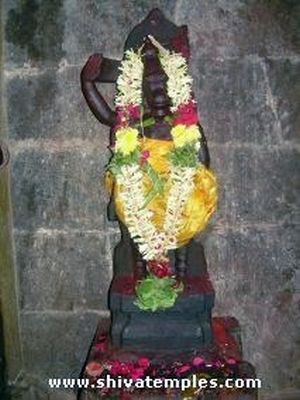
Tirumeninathar Temple, Tiruchuzhial
Location
Tiruchuzhial
Deity
Tirumeninathar, Sreedhanu Nathar, Bhoominathar
Female Deity
Sahaayavalli, Thunaimaalai Nayaki
Pathikam
Sundarar - 1
Gallery - Tirumeninathar Temple
How to Reach
This temple is located about 60 km from Madurai and 15 km from Aruppukottai. Regular bus services connect Madurai and Tiruchuzhi. Travellers from Madurai can take a bus towards Kariyapatti and alight at Nagara Chetti, from where buses are available to Tiruchuzhi. The route via Madurai – Kariyapatti – Tiruchuzhi is the most direct and convenient way to reach the temple.
Travel Tips
Visitors travelling by car or other personal vehicles can conveniently combine a visit to Tiruchuzhi with a pilgrimage to Tirupparankundram, covering both temples within half a day. Starting from Madurai around 6:00 AM typically allows devotees to reach Tiruchuzhi by 7:00–7:30 AM. Since eateries and restroom facilities are limited in the vicinity of the temple, travellers are advised to make the necessary arrangements before beginning their journey.
Temple Address
Tiruchuli Post
Tiruchuli Taluk
Virudhunagar District
PIN – 626129
Temple Hours
Morning : 6:00 - 12:00
Evening : 5:00 - 8:00
Contact
Sundara Moorthi
7708524116
Salient Features
This sacred temple is associated with several important legends and historical distinctions. It is revered as the place where Shiva relieved the Pandya king Bruhat Balan of the Brahmahatti dosha and brought a devastating deluge under control. The temple is also celebrated as the site where Goddess Parvati bestowed her divine grace upon Nandi. According to temple tradition, during the Sakshusa Manvantara, Shiva prevented a cosmic flood from engulfing the world by drawing back the floodwaters with His trident. Adding to its spiritual significance, Tiruchuzhi is renowned as the birthplace of the great sage and spiritual master, Sri Ramana Maharishi.
Origin of the Temple Name
This place experienced severe floods and natural disasters in every yuga. During the Dwapara Yuga, the ruler of this region sought the divine intervention of Lord Shiva to save his kingdom from an approaching catastrophic flood. Responding to his plea, Lord Shiva struck the earth with His trident, creating a cavity in the ground. The floodwaters entered the cavity and formed a swirling whirlpool around the trident. This phenomenon gave rise to the name “Shuzhi”, and over time, with the addition of the sacred prefix “Thiru”, the place came to be known as Thiruchuzhiyal.
Temple Architecture
Layout
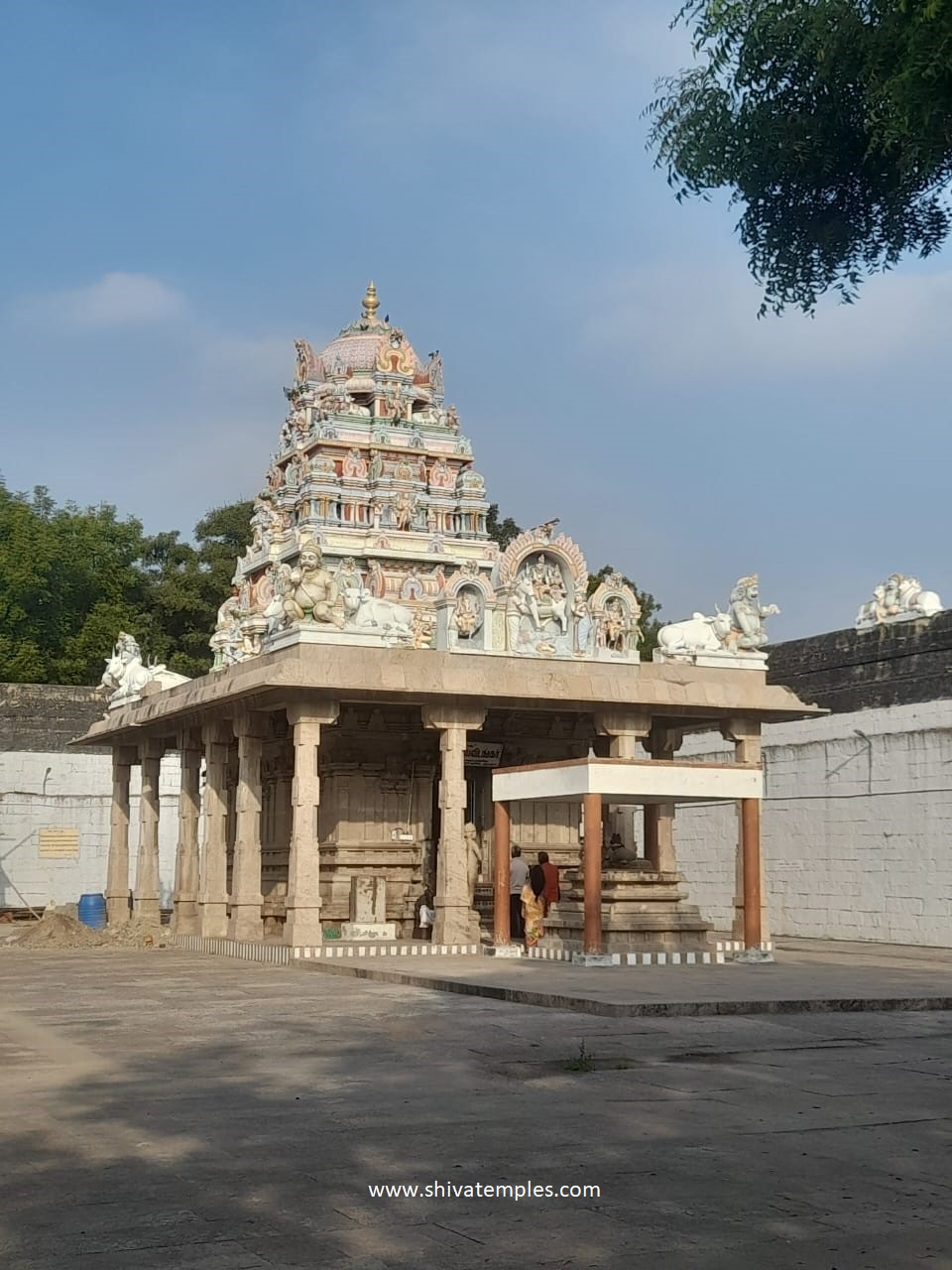
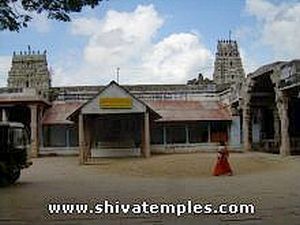
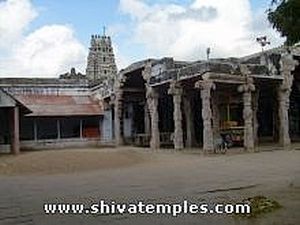
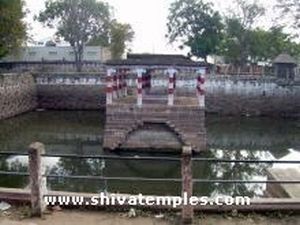
A spacious courtyard greets devotees as they enter the temple complex, creating an atmosphere of serenity and grandeur. The entrance is marked by an elegant gopuram that leads to the shrine of Goddess Sahayavalli. To the right stands another imposing gopuram, whose gateway provides access to the sanctum of the presiding deity. Facing this entrance is a large and impressive pillared hall, showcasing the temple’s architectural beauty. Opposite the hall lies the sacred temple tank, known as Kavvaikadal, an important theertham associated with the temple’s religious traditions and legends.
Kavvaikadal Theertham
During a visit to this temple in February 2024, it was disheartening to find the water body completely dry. It was reported that several new establishments around the temple premises are obstructing the natural flow of water into the tank.
Kambathadi Mandapam
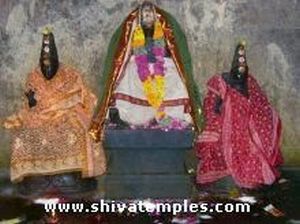
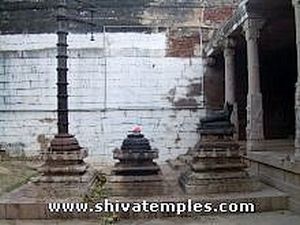
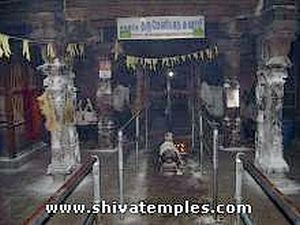
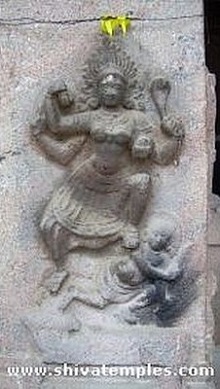
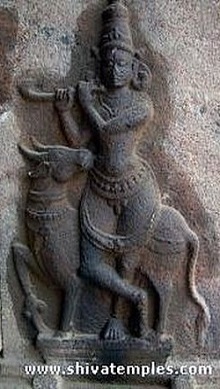
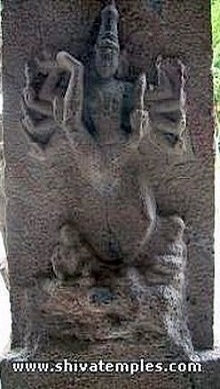
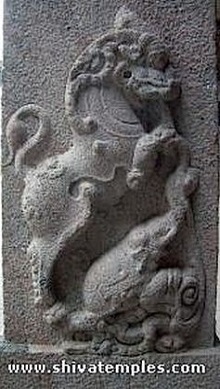
Beyond the gateways lies the Kambathadi Mandapam, an important hall that serves as a link between the shrines of the Goddess and the presiding deity. This mandapam houses the Dwajasthambam (flagstaff), Balipeetam, and the shrines of Lord Vinayaka, Lord Subramanya with His consorts Valli and Deivanai, and the Navagrahas. The hall is supported by numerous pillars embellished with finely carved sculptures that reflect the artistic excellence of the temple’s craftsmen. Among these sculptural masterpieces, a particularly striking pillar features an exquisite image of Hanuman, drawing the attention of devotees and art enthusiasts alike.
Pillar Sculptures
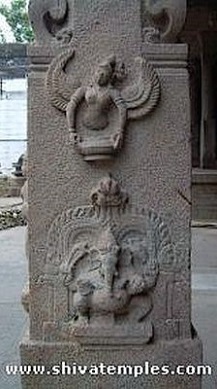
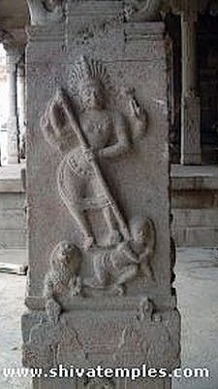
Deities and Sannidhis
Main Sanctum
Proceeding further, after offering prayers to Nandi, one passes through the Sabha Mandapam, Antharala Mandapam, and Artha Mandapam, each set within the other. The presiding deity, Tirumeninathar—a Swayambhoo Linga—rests on a square Aavudayar within the sanctum. The sanctum itself is encircled by a moat-like structure. The presiding deity, Tirumeninathar, is a Swayambhoo Lingam facing east and is positioned in such a way that sunlight falls directly upon it twice a year.
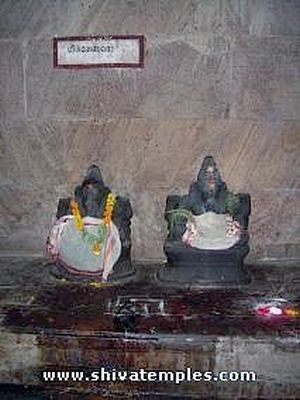
The prakaram surrounding the sanctum houses sannidhis for the 63 Nayanmars, the Saptha Matras, and Surya—the sun god—along with his consorts Usha and Prathyusha. Vinayaka occupies the southwest corner of the prakaram, while Somaskanda, Kasi Viswanathar, Visalakshi, and Suzhigai Govindar are situated on the west side. Muruga is enshrined in the northeast corner. The walls around the sanctum sanctorum feature Dakshinamurthy, Lingothbhava, Goddess Durga, and Brahma as the Goshta Murthas.
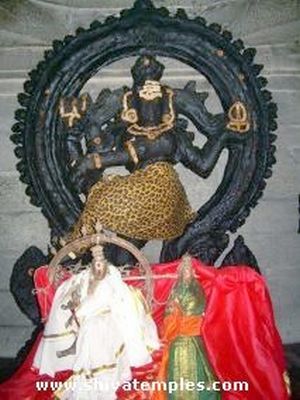
Nataraja Sabha
The Nataraja Sabha is located within the Sabha Mandapam. Adjacent to it are the utsava murthys of Nataraja, Sivagami, Patanjali, and Vyagrapadar.
Brahmothsava
Sage Gautama and his wife Akalika are said to have witnessed Lord Nataraja’s cosmic dance at this site. Their figures can be seen nestled among the idols of the 63 Nayanmars, positioned so that they face Nataraja in the Sabha Mandapam. The annual Brahmotsava is celebrated during the Tamil month of Panguni to commemorate this significant event.
Goddess Sahayavalli & Other Sannidhis
Goddess Sannidhi
Sahayavalli, also known as Thunaimaalai Nayaki, has a separate east-facing sannidhi. In front of her shrine stand the Dwajasthambam, Balipeetam, and Nandi. The mandapam roof in front of the female deity features an intricately carved Sri Chakra.
Outer Prakaram
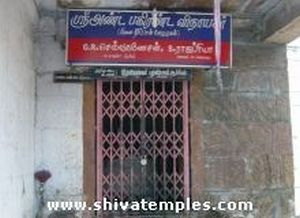
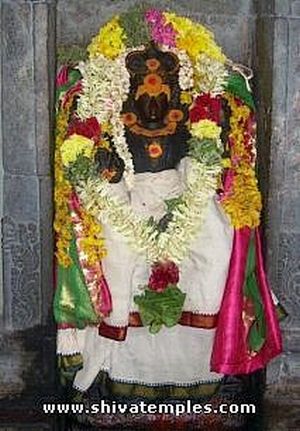
The sannidhi of Anda-Bagiranda Vinayaka is located in the southwestern corner of the outer prakaram. On the opposite northwestern corner stands the sannidhi of Pralaya Vidangar, who subdued the deluge in this region. Between these two corner sannidhis, along the west side of the prakaram, grows the temple’s sacred sthala vruksham, the Punnai tree. In the northeast corner of the outer prakaram is the Dandapani Swami sannidhi, accompanied by a Dwajasthambam, Balipeetam, and a peacock in front.
Divine Worship
This temple is closely associated with numerous divine and legendary figures who are believed to have worshipped the presiding deity. Among them are Mahavishnu, Indra, Brahma, Surya, Sage Gautama, Akalika, Sage Kanva, Arjuna, and Cheraman Perumal, all of whom are said to have received the deity’s blessings here. The temple is also linked to an important legend involving Bhoomi Devi, the Earth Goddess. According to tradition, she became tainted after coming into contact with the breath of the demon king Hiranyakshan. Seeking purification, Bhoomi Devi worshipped Shiva at this site and was absolved of the impurity. In remembrance of this event, the presiding deity is revered as Bhuminathaswamy, the deity worshipped by Bhoomi Devi.
Tiruchuzhi is the birthplace of Sri Ramana Maharishi, and his birth home is situated very close to the temple.
More Temple Photos