Nellaiappar Temple, Tirunelveli
Location
Tirunelveli
Deity
Nellaiappar, Venuvana Nathar
Female Deity
Kanthimathi Ammai
Pathikam
Sambandhar - 1
Gallery - Nellaiappar Temple

How to Reach
This Shiva temple, located in Tirunelveli, stands on the sacred banks of the river Tamiraparani. Tirunelveli is well connected by both rail and road.
Temple Address
Tirunelveli
Tirunelveli District
PIN – 627001
Salient Features
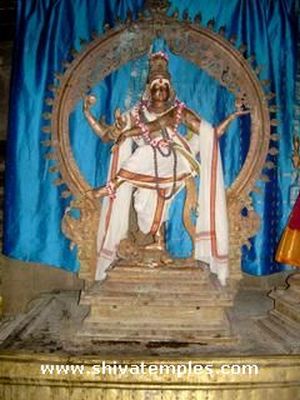
- Pancha Sabha: This temple is home to the revered Tamira (Copper) Sabha, one of the five sacred sabhas where Nataraja is believed to perform His eternal cosmic dance, symbolizing the rhythm of creation, preservation, and dissolution.
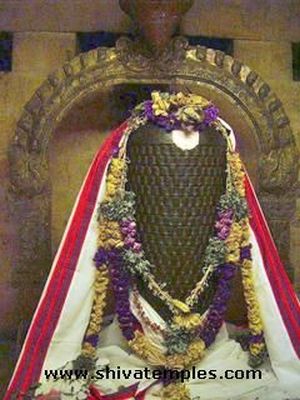
- Swayambhu Linga: The presiding deity is a self-manifested (Swayambhu) Shiva Linga, revered for its ancient origin. Remarkably, the Linga still bears the visible mark of an axe from the moment of its discovery, standing as a powerful testament to its divine manifestation and timeless sanctity
- Large Temple Complex: Spread across nearly 14 acres, this magnificent complex stands among the largest and most prominent temples in the Tirunelveli district.
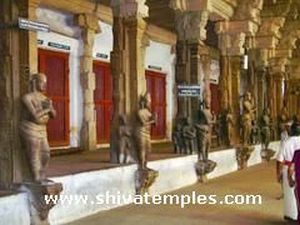
- Musical Pillars: Adding to its architectural and spiritual splendor are the unique musical pillars, which resonate with the seven classical musical notes when gently tapped, leaving devotees and visitors alike in awe.
- Thousand Pillared Hall: The temple is renowned for its magnificent thousand-pillared mandapam, an awe-inspiring hall adorned with intricately carved pillars.
- Unique Deity: The temple also houses Juradevar, a rare and powerful deity depicted with three heads and three legs, revered by devotees for His extraordinary healing powers.
Temple Legend - The Discovery of the Sacred Linga
According to temple tradition, a milkman who regularly supplied milk to the royal household repeatedly stumbled over a stone on his journey, causing the milk in his vessel to spill over it each time. Perplexed by this unusual occurrence, he reported the matter to the king. Curious to learn the truth, the king visited the site with his attendants and ordered the stone to be removed. To their astonishment, blood flowed from the stone when it was struck with an axe. At that moment, a celestial voice instructed them to excavate the spot. Upon digging, they discovered that the stone was in fact a sacred Swayambhu (self-manifested) Shiva Linga. Recognizing its divine nature, the king consecrated the Linga and built a temple around it. The Linga is believed to still bear the mark left by the axe, serving as a lasting reminder of the miraculous revelation that led to the establishment of the temple.
Temple Legend - Origin of the Name 'Tirunelveli'
The name Tirunelveli is derived from a celebrated legend associated with Vedha Bhattar, a devoted worshipper of Shiva who regularly collected paddy from the townspeople and offered it to the deity as a sacred service. On one occasion, after spreading the paddy out to dry in the sun, he went to bathe in the nearby river. While there, dark clouds gathered and heavy rain began to fall, causing him great concern for the paddy he had left exposed. Rushing back, he was astonished to witness a divine miracle: although rain was pouring all around, a radiant circle of sunlight protected the paddy, keeping it completely dry. Amazed by this extraordinary sight, Vedha Bhattar informed King Rama Pandiyan, who came to the spot and personally witnessed the marvel. Deeply moved by the deity's grace in safeguarding His devotee’s offering while blessing the land with rain, the king and the people revered the deity as Nelvelinathar—“the Lord who protected the paddy.” In remembrance of this miraculous event, the region, formerly known as Venuvanam, came to be called Nelveli, which later evolved into the sacred name Tirunelveli.
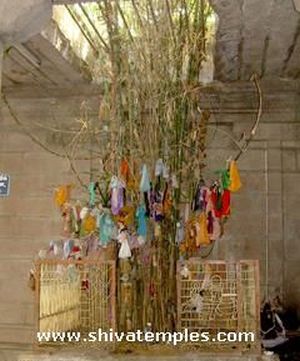
Historical records and sacred tradition indicate that this place was once known as Venuvanam (the bamboo forest). It is believed that Lord Shiva manifested here as a Shiva Linga, and the four Vedas stood around Him like bamboo trees, offering divine shade and protection. In remembrance of this sacred vision, the presiding deity came to be worshipped as Venuvananathar.
The Anavarata Khan Sannidhi
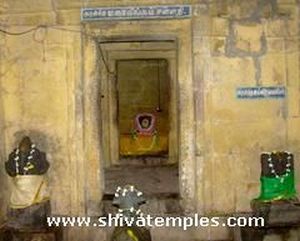
In the south-eastern corner of the temple prakaram stands a Shiva Linga known as the Anavarata Khan Lingam, commemorating a remarkable episode in the temple’s history. According to tradition, the wife of a Nawab was once afflicted by a serious illness and was advised to seek the blessings of Nellaiappar. Acting on this advice, she arranged for special worship and rituals to be performed through the temple priests. By the grace of the deity, she was miraculously cured and subsequently gave birth to a son, who was named Anavarata Khan. In gratitude for this divine blessing, a separate sannidhi was established in the prakaram, where a Shiva Linga was consecrated in his name. An opening was also created in the temple’s outer wall, allowing the Nawab and his son to offer their prayers and pay homage to the deity without entering the inner precincts of the temple.
Temple Layout and Architecture
Vast Temple Complex
The Gandhimati–Nellaiappar Temple is one of the largest and most impressive temple complexes in Tirunelveli district, covering an area of approximately 14 acres. The sprawling complex measures about 756 feet from north to south and 378 feet from east to west. Dedicated to Nellaiappar and Goddess Gandhimati, the temple features separate sanctums for the presiding deities, which are gracefully linked by a magnificent stone hall, reflecting the grandeur of traditional Dravidian architecture.
Temple Entrance
Devotees entering the temple are welcomed by a majestic white Nandi, standing over 10 feet tall. After offering prayers and circumambulating the dwajasthambam situated nearby, visitors proceed towards the sanctum of Lord Nellaiappar. Along the way, an imposing idol of Lord Ganesha, nearly 9 feet in height, draws immediate attention and provides an auspicious introduction to the sacred precincts of the temple.
Three Prakarams
The sanctum of the presiding deity is enclosed by three concentric prakarams, each containing important shrines, sculptures, and architectural features.
- Inner Prakaram: As in many traditional Shiva temples, the Goshta Murthas—Dakshinamurthy, Brahma, and Durgai—are enshrined around the sanctum. The enclosure also contains separate shrines for Chandikeswarar, Mahishasuramardhini, and Bhairava. A noteworthy feature is the presence of a sannidhi for Govinda Raja Perumal adjacent to the main sanctum, symbolising the harmonious coexistence of the Shaiva and Vaishnava traditions.
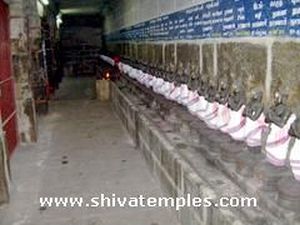
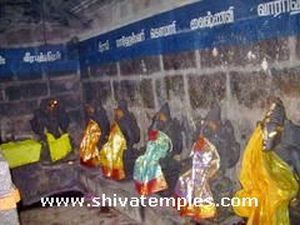
- Second Prakaram: Larger than the inner enclosure, this prakaram is renowned for its musical pillars, which produce the seven musical notes when gently tapped. It also houses the sacred Tamira Sabha, along with shrines and images of the 63 Nayanmars, Ashtalakshmi, Saneeswarar, and the Sahasralingam.
- Outer Prakaram: The outermost prakaram is remarkably spacious and contains several important shrines. From here, devotees can access the shrine of Goddess Gandhimati through a mandapam known as the Amma Mandapam. This enclosure also houses the impressive south-facing shrine of Lord Muruga, worshipped here as Arumukha Nainar. The deity is depicted with six faces and twelve arms, seated majestically on a peacock, with Valli and Deivanai standing gracefully on either side.
Thousand-Pillared Hall
Among the temple’s architectural highlights is its magnificent thousand-pillared hall. This grand mandapam serves as the venue for the annual Kalyana Utsavam, the celestial wedding festival of Goddess Gandhimati and Lord Nellaiappar, celebrated with great devotion during the Tamil month of Aippasi (mid-October to mid-November).
Pancha Sabha Sthalam - Tamira Sabha
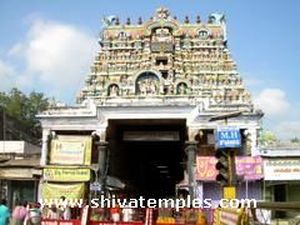
Tirunelveli district holds a unique place in Shaivite tradition as it is home to two of the sacred Sabhas associated with Nataraja’s cosmic dance—the Tamira Sabha at the Gandhimati–Nellaiappar Temple and the Chitra Sabha at Courtallam. The Tamira Sabha, one of the celebrated Pancha Sabhas, is located within a separate enclosure of the temple and is revered as the hall where Nataraja performed His divine dance. Here, Nataraja is worshipped as Thamira Sabapati. The hall derives its name from the copper plates that adorn its ceiling, while its floor is beautifully finished with wooden panels. Surrounding the deity are images of Rudra, Vishnu, the four Vedas, and revered sages, creating a celestial setting that enhances the sanctity of the shrine. The temple’s magnificent seven-tiered gopuram further reflects its artistic splendour through its intricate sculptures and pictorial decorations. Within this sacred environment, Nataraja is also venerated as Santhana Sabapati, adding to the spiritual and architectural grandeur of the temple.
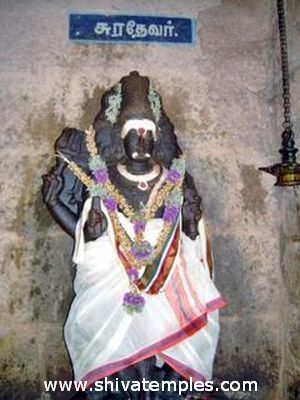
Juradevar
One of the distinctive features of this temple is the presence of Juradevar, a rare deity depicted with three heads, three legs, and three arms, carrying a rod, a bell, and a trident. Devotees firmly believe in the deity’s healing powers and offer special abhishekams using a mixture of ground pepper and hot water, seeking relief from fevers and related ailments. The temple also follows unique ritual practices that set it apart from many other temples. During the Tamil month of Margazhi, the temple remains closed at dawn, whereas in the month of Karthikai it opens as early as 4:00 AM, enabling devotees to participate in and witness the sacred early-morning worship. Special prayers conducted on Mondays during Karthikai attract large numbers of devotees who come to seek the blessings of the presiding deities.
Gallery - Nellaiappar Temple