Vilvanatheswarar temple, Tiruvallam
Location
Tiruvallam - in North Arcot District
Deity
Vilva Naatheswarar, Vallanathar
Female Deity
Dhanu Madyaambal, Vallaambikai
Pathikam
Sambandar - 1
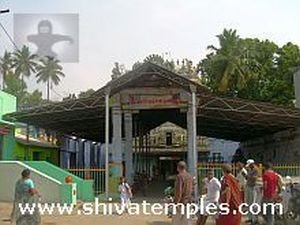
Gallery - Vilvanatheswarar Temple


How to Reach
This Shiva Temple is located about 120 kilometers from Chennai. The nearest railway station is Tiruvalam, situated on the Chennai–Katpadi Junction route operated by the Southern Railway. The temple lies approximately 2 kilometers from Tiruvalam railway station and about 10 kilometers from Ranipettai, along the Chennai–Chittoor–Bangalore Highway. Regular bus services are available from Arcot, Walajah, and Ranipettai to Tiruvallam, providing convenient access to the temple.
Temple Address
Thiruvalam Post
Via Ranipet
Katpadi Taluk
Vellore District
PIN – 632515
Temple Hours
Morning : 6:00 - 12:00
Evening : 4:00 - 8:00
Nearby Paadal Petra Shiva Temples
Temple Layout
Temple Complex and Niva River
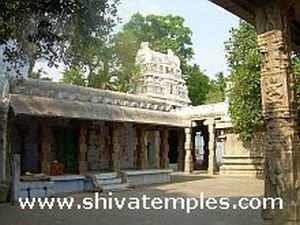
The Tiruvalam temple, situated along the banks of the Niva River, extends over an area of five acres and features a prominent entrance that leads to a mandap, followed by a south-facing, four-tiered Raja Gopuram. According to legend, the river altered its course at the behest of God Shiva, who addressed it as “Neeva”, meaning “you come” in Tamil; over time, this name gradually evolved into “Niva.” Historically, the waters of this river were used for the anointing (abhishekam) of the presiding deity, underscoring its sacred significance.
Inner Sanctums and Sannidhis
Upon entering through the Rajagopuram, visitors encounter Gauri Theertham on the right, within which lies an island-like enclosure known as Neerazhi Madapam. A gateway crowned with another three-tiered gopuram leads into the inner prakaram, where the Utsava (Urchava) idols are housed. This enclosure also contains smaller-sized sannidhis dedicated to Kasi Vishwanathar and Chandra Mouleeshwarar, in contrast to the larger-sized sannidhi of the Arunachaleshwara Linga, which occupies a more prominent position.
In addition, there are several small-sized Lingas named SadaShiva, Ananthar, Sreekantar, and Ambikeshwarar, with the Sahasra Linga located nearby. Arumukha (Murugan) is depicted along with his consorts Valli and Deivanai, accompanied by the Nāga Devatā. An idol of the revered saint-poet Arunagirinathar is also present, positioned in one corner of the prakaram.
Other Sannidhis
Adjacent to the sannidhi of Arumukha are three additional Lingas known as Guru Eeshwarar, Vishnu Eeshwarar, and Vidhatha Eeshwarar. Opposite the sannidhi of the presiding deity, Aadi Vilva Natheshwarar, stands an ancient jackfruit tree, adding to the sacred and historical ambience of the temple.
The Four Nandis - A Unique Feature
One of the unique features of this temple is the presence of four Nandis. As per traditional temple architecture, one Nandi is situated on the eastern side of the outer prakaram in alignment with the balipeetam and dwajasthambam, while a second Nandi, known as Adhikara Nandi, stands directly in line with it. The third Nandi is housed within the Artha Mandapam, and the fourth, a notably larger Nandi installed by Tiruvalam Mouna Swamigal, occupies a central position among the others. Interestingly, the Adhikara Nandi faces westward toward the presiding deity, whereas the remaining three Nandis face eastward, away from the sanctum. Due to its impressive size, the fourth Nandi partially obstructs the direct view of the presiding deity from certain points within the temple.
Main Deity - VilvaNatheshwarar
Swayambhu Linga
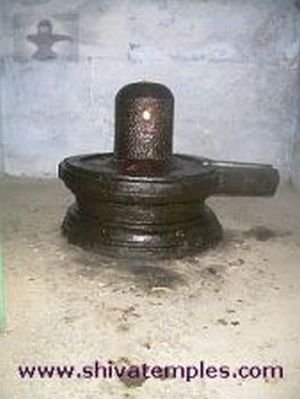
The presiding deity, Vilva Natheshwarar, is worshipped as a Swayambhu Linga enshrined on a square Avudayar within an east-facing sanctum. A distinctive feature of this sanctum is its two entrances, one facing east and the other south. Further enhancing its uniqueness is a moat-like structure that surrounds the sanctum, an uncommon architectural element rarely seen in Shiva temples.
Sanctum Artwork and Inscriptions
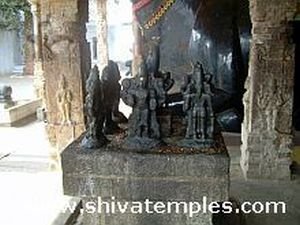
The sanctum walls are adorned with numerous ancient inscriptions and feature the Goshta Murthis of Vinayaka, Dakshinamurthy, Mahavishnu, and Brahma. Surrounding the sanctum is a prakaram that houses sannidhis dedicated to Brahmi, Chandeshwarar, and the 63 Nayanmars, arranged in two tiered rows.
Underground Sanctum
Within the mandapam adjoining the sanctum is a sannidhi for Shankara Narayanar, while a unique subterranean shrine dedicated to Paathaleshwarar is located below ground level in a vault-like enclosure. This underground sanctum houses a Shiva Linga, Nandi, and Vinayaka. According to local tradition, performing abhishekam to Paathaleshwarar for forty-eight consecutive days during periods of drought or famine is believed to invoke much-needed rainfall.
Architectural Marvel
The Dwara Palakas guarding the entrance to the main sanctum are renowned for their intricate stone craftsmanship, with one of the figures portrayed in a posture resembling a graceful dance gesture. Another significant feature of the temple is the Jiva Samadhi of Sanakar, a disciple of Dakshinamurthy, situated between the Nandi and the presiding deity. Devotees traditionally believe that meditating at this sacred spot helps alleviate the effects of karmic burdens and curses carried over from previous births.
27 Stars on the Vimana
One of the temple’s most remarkable features is the depiction of the twenty-seven Nakshatras in their physical forms, intricately sculpted on the vimana above the sanctum. These representations add both artistic and astrological significance to the shrine, making it a unique aspect of the temple’s architecture.
Sacred Legends and Divine Events
This sacred temple is traditionally revered as the site where the celebrated Tamil poetess Avvaiyar was blessed with a divine gooseberry, a miraculous fruit believed to bestow longevity upon those who consumed it.
The temple is also associated with the well-known legend of Vinayaka, who earned a divine mango by circumambulating his parents, Shiva and Goddess Umadevi, symbolizing the supreme importance of filial devotion and wisdom. Commemorating this episode, a special sannidhi near the sannidhi of Sani Bhagavan features Ganesha seated on a Padma Peetham elevated upon a Chatura Peetham, gracefully holding a mango in his trunk.
The temple also holds literary significance, as the revered saint-poet Arunagirinathar composed a Tiruppugazh hymn in praise of Muruga here. Adding to the temple’s unique spiritual landscape, two separate sannidhis of Mahavishnu flank the goddess’s shrine—one depicting the deity in a standing posture and the other in a seated posture—while a balipeetam and a lion positioned before the goddess’s sannidhi further enhance the sacred arrangement within the prakaram.
The Legend of Nandi and the Demon Kanchan
A unique tradition associated with this temple explains why the Nandi faces outward toward the temple entrance rather than toward the presiding deity. According to local legend, a devoted worshipper regularly traveled nearly five kilometers to Kanchana Giri to fetch water for the abhishekam of the deity. During these journeys, the devotee was repeatedly troubled by a demon named Kanchan, who had obtained immortality through the grace of Shiva. Unable to endure the harassment, the devotee sought the deity’s protection, whereupon Shiva dispatched Nandi to confront the demon.
In the ensuing battle, Nandi defeated Kanchan and, using his horns, severed the demon’s body into eight parts. Tradition holds that wherever Kanchan’s blood touched the ground, a Shiva Linga manifested, sanctifying the surrounding region. Even today, numerous Shiva Lingas are reportedly discovered during excavations along the slopes of the hill. To commemorate this divine victory, special ceremonies are conducted at the eight temples believed to have been established at the locations where the demon’s body parts fell. The outward-facing Nandi is said to remain ever vigilant, guarding the temple from any lingering disturbances associated with Kanchan and preserving the sanctity of the shrine.
Another remarkable feature is the appearance of a radiant Jyoti on the hill during every full moon, shining with particular brilliance during the Tamil months of Chitrai and Thai, a phenomenon that continues to attract large numbers of devotees. The temple also enjoys literary and historical significance, being referred to as Tiruvallam in the hymns of Tirugyana Sambandar and the Tiruppugazh compositions of Arunagirinathar.
More Photos - Vilvanatheswarar Temple