Panankatteeswarar temple, Tiru-Panankattur
Location
Tiruvanpaarthaan Panankattur
Deity
Krupapureeswarar, Panankatteeswarar, Thaalapureeswarar
Female Deity
Krupanayaki, Amirthavalli
Pathikam
Sundarar - 1
Gallery - Panankatteeswarar Temple


How to Reach
This Shiva temple is located about 16 km from Kancheepuram. Bus facilities are available from Kancheepuram.
Temple Address
Thiruppanangadu Post
Via Vembakkam
Cheyyar Taluk
Tiruvannamalai District
PIN – 604410
Temple Hours
Morning : 7:00 - 12:00
Evening : 5:00 - 8:00
Nearby Paadal Petra Shiva Temples
Temple Structure and Layout
Unique Dual Deity Temple
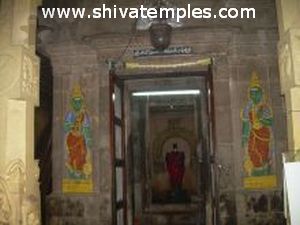
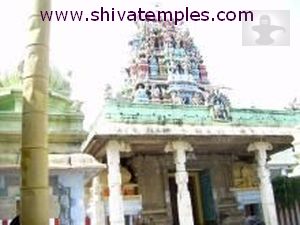
The Shiva temple at Tiruppanankattur faces east and does not have a Rajagopuram at its main entrance. This entrance leads into the prakaram, where the Dwajasthambam, Balipeetam, and Nandi are situated. Directly opposite this entrance is another gateway topped with a three-tiered gopuram, through which devotees can access the sannidhi of Krupanatheswarar.
Twin Configuration
To the left of the initial Dwajasthambam, Balipeetam, and Nandi, there is a second, identical set. Opposite this second arrangement, an opening is found in the inner wall of the temple. Through this opening, the sannidhi of Thalapureeswarar can be seen, located adjacent to the sannidhi of Krupanatheswarar.
Gajaprushta Vimanam
Both presiding deities in the temple face east, and the vimanam above them is designed in the form of an elephant’s back, known as Gajaprushtam. Complementing the two male deities, the temple also houses two female deities.
Special Feature
This temple is unique in housing two principal deities—Thalapureeswarar and Krupanatheswarar—along with two female deities, making it a rare example of a dual-deity configuration among Shiva temples.
Sage Agasthya and Thalapureeswarar
During the divine wedding of Shiva and Parvathy at Mount Kailash, the vast assembly of Devas, sages, and celestial beings caused an imbalance in the Earth’s north–south axis. To restore cosmic harmony, Shiva instructed Sage Agasthya to journey southward. Obeying this divine command, Sage Agasthya traveled to the southern regions and when he arrived here, he consecrated a Shiva Linga, where the deity is worshipped today as Thalapureeswarar. Adding to the temple’s spiritual significance, stone sculptures of Sage Agasthya and a palm tree are positioned near the entrance to the sanctum. The Goshta Murthis adorning the sanctum walls include Vinayaka, Dakshinamurthy, Lingothbhava, Brahma, and Goddess Durga, while the temple notably does not have a separate sannidhi dedicated to Chandeshwarar.
Other Places Visited by Sage Agasthya during his journey to south
During the celestial wedding of Shiva and Parvati at Mount Kailash, the presence of countless gods and sages gathered in the north caused the earth to tilt slightly. To restore balance, Shiva asked the revered sage Agastya to travel to the southern regions. Agastya felt sorrowful at leaving, as he wished to witness the divine marriage. Understanding the sage’s devotion, Shiva granted him a boon that he would be able to behold the sacred wedding from wherever he was and whenever he desired.
Places visited by Sage Agasthya in his journey to south -
Sage Pulasthya and Krupanatheshwarar
Disciple's Establishment
Pulasthya, a disciple of Sage Agasthya, established a Shiva Linga named Krupanatheswarar adjacent to Thalapureeswarar during his visit to this site. The entrance to this sanctum is adorned with stone sculptures of Sage Pulasthya and a palm tree.
Unique Dakshinamurthy
The Goshta Murthis include Dakshinamurthy, Mahavishnu, and Brahma, while Chandeshwarar is enshrined separately with a dedicated vimanam above. Notably, Dakshinamurthy is depicted with his right leg bent, left leg folded, and his hands held in chinmudra.
Ritual Precedence
Thalapureeswarar, also known as Panankatteeswarar and consecrated by Sage Agasthya, holds primary importance in this temple. Rituals are first performed to the Linga established by the guru Sage Agasthya, followed by the Linga consecrated by his shishya, Sage Pulasthyar. The deity praised in the Thevaram hymns is Panankatteeswarar.
Guru-Shishya Tradition
This temple beautifully exemplifies the Guru–Shishya (teacher–disciple) tradition, where worship is first offered to the Linga established by the guru, Sage Agasthya, followed by the Linga consecrated by his shishya, Sage Pulasthyar.
Sacred Palm Tree - Sthala Vruksham
The sacred association between the palm tree and the deity Thalapureeswarar is believed to have originated from Sage Agasthya’s worship of the deity with offerings of palm fruit. Owing to this divine connection, the deity came to be known as Panankatteeswarar, a name that refers to a “forest of palm trees.” Reflecting the importance of the palm tree in the temple’s tradition, inscriptions found within the temple warn that harming or cutting down living palm trees within the complex may result in adverse consequences or dosha. The two principal palm trees revered in connection with this belief can still be seen outside the temple, behind the Kottai Muneeswarar Temple. The temples that have palm tree as its 'Sthala Vruksham' :
The following temples have the palmyra tree (Panai Maram) as their Sthala Vruksham (sacred tree):
Amirthavalli and Krupanayaki
The divine consorts, Goddess Amirthavalli and Goddess Krupanayaki, are enshrined in separate sanctums, each with its own dedicated prakaram. The circumambulatory paths surrounding these sanctums further enhance the temple’s spiritual significance, housing shrines dedicated to Bhairavar and Chandra for the benefit of devotees.
Exquisite Stone Sculptures
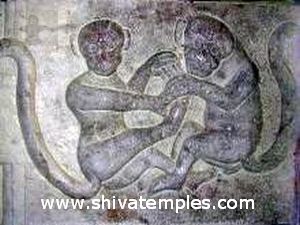
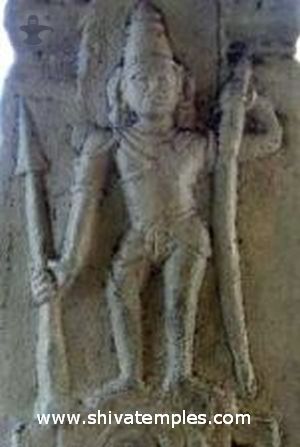
The mandapam of this temple is renowned for its exquisite and rare stone sculptures carved on the pillars. Among the most remarkable are a Naga-Linga sculpture on the pillar opposite the sanctum of Goddess Amirthavalli, an image of Rama carved on a pillar near the inner entrance, and a vivid depiction of the battle between Vali and Sugreeva on a pillar facing the sanctum of Krupanatheswarar. These sculptures are arranged with remarkable architectural ingenuity: the pillars depicting Rama and the combat between Vali and Sugreeva are aligned in such a way that they share a direct line of sight, yet the image of Rama remains hidden from view behind the pillar portraying Vali and Sugreeva. This unique arrangement is believed to symbolically represent the episode from the Ramayana in which Rama concealed himself while aiding Sugreeva in his battle against Vali. The temple is also revered in the Thevaram tradition, with a Pathikam on this sacred shrine composed by Sundarar appearing in the Seventh Tirumurai.
More Photos - Panankatteeswarar Temple