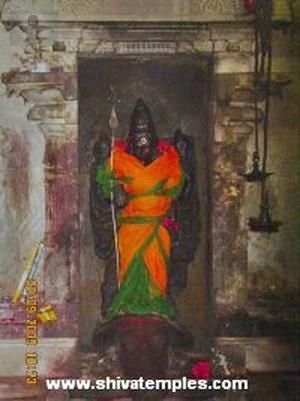
Maanickavannar temple, Tiruvazhkoliputhur
Location
Tiru-Valloli-Puthur
Deity
Manickavannar, Ratnapureeswarar
Female Deity
Vandamarpoonguzhali
Pathikam
Sambandar - 2, Sundarar - 1
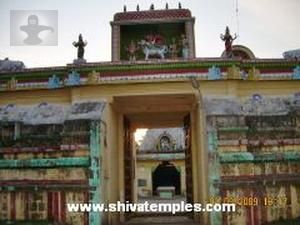
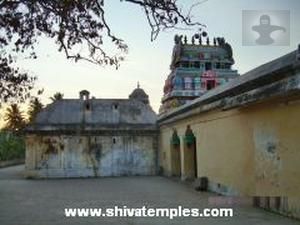
Gallery – Maanickavannar Temple, Tiruvazhkoliputhur

How to Reach
Situated approximately 16 kilometres from Mayiladuthurai and 11.6 kilometres from Vaitheeswaran Kovil, Tiruvalaputtur can be reached by proceeding from Vaitheeswaran Kovil towards Tiruppanandal until arriving at Elanthoppu, at which point a branch road leads directly to the temple.
Travel Tips
The four temples of Tirukurakkuka, Tiruvaloliputhur, Tirukarupariyalur, and Tirupunkur form a circuit that can be conveniently visited as a half-day trip from Vaitheeswaran Koil. The optimal route is to begin at Vaitheeswaran Koil and proceed to Tirukurakkuka, followed by Tiruvaloliputhur, Tirukarupariyalur, Tirupunkur, and finally return to Vaitheeswaran Koil. The roads leading to these temples wind through picturesque paddy fields, and it is better to visit during daylight hours rather than in the late evening, as they are interiorly located in villages.
Temple Address
Tiruvalaputhur
Tiruvalaputhur Post
Mayiladuthurai Taluk
Mayiladuthurai District
PIN – 609205
Temple Hours
Morning : 7:30 AM - 11:30 AM
Evening : 4:30 PM - 8:00 PM
Nearby Paadal Petra Shiva Temples
Sthala Purana
Vasuki & the Ocean of Milk
The devas and asuras worked together to churn the ocean of milk (parkadal) in order to acquire amrita, the elixir of immortal life. Mount Mandara served as the churning rod, while Vasuki the serpent acted as the churning rope, wrapping around the mountain. As the cosmic ocean was churned to obtain the nectar of immortality, Vasuki endured immense physical strain and exhaustion from the arduous churning motion. To alleviate her fatigue and rejuvenate her energy, Vasuki sought solace in the worship of Lord Shiva. She retreated to this sacred site, taking refuge in a snake pit, where she performed her devoted Shiva puja — leading the place to be known as 'Putrur.'
Arjuna’s Encounter & the Hidden Sword
During the Pandavas' exile, Arjuna embarked on a sacred pilgrimage known as a "Theertha Yatra," journeying to various holy bodies of water. His travels eventually brought him to this revered site where Vasuki had once worshipped God Shiva. Parched and weary from his long journey, Arjuna was overcome with thirst upon arriving. It was then that Shiva himself manifested before Arjuna, taking the form of an elderly man. The disguised deity handed Arjuna a stick known as a "dandam" and instructed him to press it firmly into the earth beneath a Vagai tree, assuring him that water would spring forth. Before setting off to quench his thirst, Arjuna humbly requested that the old man safeguard his precious sword until he returned.
However, while Arjuna was away, Shiva mischievously hid the sword deep within Vasuki's snake pit before vanishing from sight. Upon returning, Arjuna was perplexed to find the elderly man and his cherished sword missing. With a flash of divine insight, he realised that the old man was none other than God Shiva himself. Shiva appeared once more before Arjuna and revealed the concealed location of the sword within the serpent's lair. This mystical encounter bestowed the name "Vaal Oli Puthur" — meaning "the snake pit where the sword was hidden" — which gradually evolved over the ages into its current form, "Valaputhur."
Mahavishnu’s Ruby Linga & Manikka Vannar
The sanctity of Valaputhur was further magnified when Mahavishnu himself established and venerated a linga made of precious ruby at this very spot. Thus, the presiding deity came to be known as "Manikka Vannar," in honour of the divine ruby linga worshipped by Mahavishnu.
Temple Layout
The Rathna-pureeswar temple, situated in Tiruvaloliputhur, holds great significance as the erstwhile place of worship by the serpent Vasuki. Upon approaching the east-facing temple, one encounters the sacred 'Brahma theertham' pool just outside its entrance. Stepping inside, the revered sthala vruksham, a majestic Vagai tree, stands prominently to the left. While the outer prakaram lacks any specific shrines, the 'vavval nethi mandap' to the right houses the sannidhi dedicated to the divine consort Brama Kundalambal. Progressing further into the inner prakaram, devotees encounter shrines for Vinayaka, Subramanya, Goddess Gajalakshmi, Goddess Saraswathi, the four principal Nayanmars, and Bhairavar.
The temple's Nataraja idol is a sight to behold, captivating visitors with its exquisite craftsmanship. However, the Durga within the Goshta holds special significance — the Goddess is depicted in a serene and tranquil state, believed to be the form She assumed after vanquishing the demon Mahisha. The presiding deity, Manikka Vannar, manifests as a Shiva Linga with an elongated 'Bana' or shaft. Flanking the entrance to the Artha Mandap are the 'Nruthi Vinayaka' and Vasuki, adding to the temple's rich iconography and spiritual ambiance.
Sthala Vruksham – The Vagai Tree
The 'Vaagai' tree (Albizia lebbeck), also known as the siris tree or woman's tongue tree, is the sthala vruksham and symbolises Durga's triumph over the demon Mahisha. As a representation of Durga's victory, the Vagai tree is revered as a sacred entity imbued with divine feminine energy. Many devotees believe that circumambulating the tree — especially childless couples — can bestow the blessing of fertility and the joy of parenthood. The act of circling the tree is seen as a form of prayer and devotion, through which couples seek the Goddess's intervention in their journey towards conceiving a child.
More Gallery