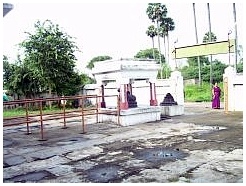
Valeeswarar temple, Kuranganil Muttam
Location
Kuranganil Muttam
Deity
Valeeswarar
Female Deity
Valayeswari, Irayaar Valayammai
Pathikam
Sambandar - 1
Gallery - Valeeswarar Temple


How to Reach
This sacred Shiva Temple is located 10 km south of Kancheepuram, on the banks of the Paalaru River. Travel along the Kancheepuram – Vandavasi route and cross the Paalaru river bridge to reach Thoosi village. From Thoosi, a branch road leads directly to the temple.
Temple Address
Kuranganilmuttam Village
Thoosi Post
Cheyyar Taluk
Tiruvannamalai District
PIN – 631703
Temple Hours
Morning : 7:00 - 10:00
Evening : 4:00 - 7:00
Contact
Sri Nataraja Gurukkal
99432 95467
Nearby Paadal Petra Shiva Temples
Temple History and Name Origin
Kuranganilmuttam derives its unique name from the combination of three Tamil words—Kurangu (monkey), Anil (squirrel), and Muttam (crow). According to temple legend, Vali, Indra, and Yama were cursed and assumed these respective forms. Seeking redemption, they worshipped God Shiva at this sacred site and were ultimately relieved of their curses. In remembrance of this divine episode, a relief sculpture depicting all three deities engaged in worship can be seen prominently at the temple entrance, serving as a visual testament to the temple’s rich mythology.
The presiding deity, Sri Valeeswarar, is enshrined as a small Shiva Lingam in a west-facing sanctum, while Goddess Erayaar Valayammai graces a separate south-facing sannidhi. The temple’s Sthala Vruksham is the sacred Ilandhai (Indian Apple) tree, which is closely associated with the temple’s traditions. The nearby sacred tank, known as Kaakkai Madu, is believed to have originated when Yama, in the form of a crow, pierced the earth with his beak to obtain water for performing Shiva Puja. Together, these sacred associations enhance the spiritual significance of Kuranganilmuttam and preserve the memory of the divine beings who worshipped here.
Temple Architecture and Layout
This Shiva temple features a single entrance that leads into a spacious outer prakaram. Within this precinct, the Balipeetam and Nandi are positioned in alignment with the entrance and the main sanctum, following traditional temple architecture. An inner gateway provides access to the west-facing sanctum, where the presiding deity Sri Valeeshwarar is enshrined as a Swayambhu (self-manifested) Lingam. One of the temple’s most remarkable features is the celestial alignment observed during certain days of the Tamil month of Chitrai, when the rays of the rising sun fall directly upon the presiding deity. This phenomenon is regarded as a testament to the temple’s architectural precision and adds to its spiritual significance, drawing devotees who seek to witness this sacred event. The inner prakaram houses sannidhis dedicated to:
- Vinayaka
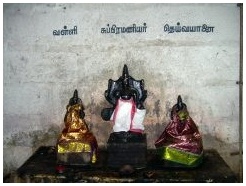
- Subramanya
- Kasi Viswanathar
- Bhairava
- Navagrahas
- Goddess Durga
- Saptha Mathas
- Nalvar - The four Nayanmars (Appar, Tirugyanasambandhar, Sundarar, Manikkavasakar)
About half a kilometre north of the temple stands an ancient rock-cut cave temple dating back to the reign of King Mahendravarman I of the Pallava Dynasty, reflecting the region’s rich architectural and cultural heritage. The temple is further sanctified by the Thevaram hymns of Thirugnanasambandar, whose Pathikam in praise of this sacred shrine is preserved in the 1st Tirumurai, affirming its status as a revered Paadal Petra Sthalam.
Gallery - Valeeswarar Temple