Kaarai Tirunatheswarar, Kachchineri Kaaraikkadu
Location
Kachchineri Kaaraikkadu
Deity
Kaarai Tiru-Natheswarar, Sathyanathaswamy, Sathyaviradeshwarar
Female Deity
Kamakshi
Pathikam
Sambandar - 1
Gallery - Kaarai Tirunatheswarar Temple

How to Reach
This Shiva temple is located at Tirukaalimedu, a locality in the north-eastern part of Kancheepuram. The road opposite the Kancheepuram Head Post Office leads directly to the temple. Bus services are available from Kancheepuram.
Temple Address
Thirukalimedu
Kanchipuram
Kanchipuram District
PIN – 631501
Temple Hours
Morning : 6:00 - 11:30
Evening : 4:00 - 7:00
Contact
Namachivaya Gurukkal
98438 32997, 98653 74005
Nearby Paadal Petra Shiva Temples
Travel Tips
All the 'Paadal Petra' temples of Kancheepuram in Thondai Naadu are situated within a relatively short distance of one another, making it possible for devotees to visit several of them in a single day. By starting your pilgrimage early in the morning and following a well-planned route, you can comfortably explore these ancient Shiva temples, experience their unique spiritual significance, and complete the circuit across the town of Kancheepuram.
Temple History and Name Origin
The region surrounding this temple was once covered by a dense growth of the thorny, bush-like herb known as Kaarai in Tamil. Owing to the abundance of this vegetation, the area came to be known as Kaarai Kaadu (the forest of Kaarai plants). Over time, the place became known as Thirukaalimedu, and the presiding deity came to be revered as Thirukaaleeshwarar. The temple is also associated with Indra, the king of the celestial gods, who is believed to have worshipped God Shiva at this sacred site. Tradition holds that Indra created a temple tank to provide water for the deity’s abhishekam (ritual anointment). This sacred water body, known today as Veppankulam, stands as a reminder of the temple’s ancient spiritual heritage, although it is presently in need of restoration and proper maintenance.
Temple Architecture and Layout
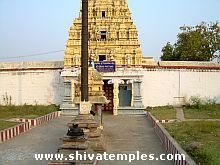
The temple is approached through a west-facing entrance, from which a pathway leads to a three-tiered Rajagopuram. Along this approach are the Dwajasthambam (flagstaff), Nandi, and Balipeetam, all aligned with the main sanctum. Passing through the gopuram, devotees enter the spacious outer prakaram, which provides a path for circumambulation (pradakshina) around the temple. From the outer prakaram, an inner gateway leads into the inner prakaram that encircles the sanctum. This inner precinct houses several important sannidhis dedicated to various deities associated with the temple’s spiritual traditions. The sannidhis located within the inner prakaram include:
- Nalvar Sannidhi - The four Nayanmars (Appar, Tirugyanasambandhar, Sundarar, Manikkavasakar)
- Indra
- Bhudhan - The Planetorial God for Mercury
- Bhairava Sannidhi
- Vinayaka Sannidhi
- Subramanya Sannidhi with His consorts Valli and Deivanai
- Gajalakshmi Sannidhi
The entrance to the sanctum is guarded by Dwara Vinayaka and Dwara Subramanya. The presiding deity, Karai Thirunatheshwarar, also known as Sathyanathaswamy, is enshrined in a west-facing sanctum as a Swayambhu (self-manifested) Lingam. This unique Lingam is notable for its reddish soil-like colour, rough natural texture, and impressive height and circumference, reflecting its ancient and self-originated nature. Adjacent to the main deity are the Utsava idol of Goddess Kamakshi Ammai, a separate Surya Sannidhi, and a Nataraja Sabha. The walls of the sanctum are adorned with the traditional Goshta Murthas, including Ganapathy, Dakshinamurthy, Lingodbhavar, Brahma, and Goddess Durga, each occupying their customary positions and enhancing the temple’s spiritual and architectural grandeur.
Astrological Significance
This sacred Shiva temple is especially revered by devotees born under the Mithuna (Gemini) and Kanni (Virgo) zodiac signs, as well as by those seeking relief from challenges associated with Mercury (Budhan) in their astrological charts. According to temple tradition, Budhan himself worshipped the presiding deity Kaarai Tirunatheswarar at this holy site, thereby sanctifying it as a place of special significance for devotees seeking the blessings of Mercury. It is believed that worshipping the deity, particularly on Wednesdays—the day associated with Budhan—helps strengthen the planet’s positive influence and brings wisdom, eloquence, prosperity, and success in life. The temple is further glorified by the Thevaram hymns of Thirugnanasambandhar, whose pathikam on this shrine is preserved in the 3rd Tirumurai.
Gallery - Kaarai Tirunatheswarar Temple

