Amirthakatesar Temple, Tirukkadambur
Location
Tiru-Kadambur (Mela-Kadambur)
Deity
Amirthakatesar
Female Deity
Vidhyu-Jyothi-Nayaki
Pathikam
Sambandar - 1, Tirunavukkarasar - 2
Gallery – Amirthakadeswarar Temple, Tirukadambur


How to Reach
This Shiva temple is situated approximately 34 km from Chidambaram and about 7.5 km from Kattumannarkoil. Regular bus services operating between Kattumannarkoil and Eyyalur pass through Melakadambur, making the temple easily accessible by public transport. The temple is located a short walk from the Melakadambur bus stop. Visitors should note that there are two nearby villages bearing the name Kadambur. The temple at Melakadambur is the celebrated Paadal Petra Sthalam praised in the sacred Thevaram hymns, while the temple at Keezhkadambur is revered as a Thevara Vaippu Thalam, having been mentioned by the Nayanmar saints in their hymns. Care should therefore be taken to ensure that the correct destination—Melakadambur—is chosen when planning a visit.
Temple Address
Melakadambur
Melakadambur Post
Kattumannarkoil Taluk
Cuddalore District
PIN – 608304
Temple Hours
Morning : 7:30 - 9:30
Evening : 5:00 - 8:00
Nearby Paadal Petra Shiva Temples
Temple Legend
The Drop of Amritha
According to temple legend, after the successful churning of the Ocean of Milk, the devas eagerly sought to partake of the coveted Amritha, the nectar of immortality. In their haste and excitement, however, they neglected to first worship Vinayaka, the remover of obstacles and the deity traditionally invoked before all auspicious undertakings. Offended by this omission, Vinayaka took possession of the pot containing the divine nectar and journeyed through a dense forest of Kadamba trees. As he passed through the forest, a single drop of the sacred Amritha accidentally fell from the vessel onto the ground. The spot where it touched the earth was instantly sanctified, and a self-manifested Shiva Linga emerged there. Realizing the gravity of their mistake, Indra and the other devas hastened to the site and earnestly pleaded with Vinayaka to return the pot of nectar. Vinayaka advised them to seek the blessings of Shiva and worship the newly manifested Linga. Following his counsel, Indra performed sincere prayers and worship at the sacred site. The deity enshrined there came to be known as Amrithakadeshwarar, “the Lord who manifested from the nectar of immortality,” and the place became a revered center of Shaivite worship.
Indra’s Failed Attempt
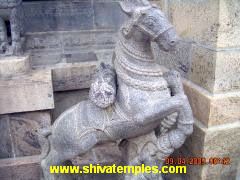
Another cherished legend associated with this temple speaks of the deep devotion of Indra toward his aged mother. She regularly undertook pilgrimages to worship Amrithakadeshwarar. Wishing to spare her the difficulties of travel, Indra decided to transport the entire sanctum to his celestial realm so that she could continue her worship in comfort. Harnessing his powerful celestial horses, he attempted to draw the sanctum away from its sacred location. However, in his eagerness to fulfill his plan, Indra once again failed to seek the blessings of Vinayaka before beginning the undertaking. As a result, Vinayaka intervened and pressed his foot upon the wheels of the chariot carrying the sanctum, bringing it to an immediate halt. Despite repeated efforts and the full strength of his celestial horses, Indra was unable to move it even the slightest distance. Bewildered and humbled by this obstacle, he prayed to Shiva for guidance. Shiva then revealed that it was His wish to remain at this sacred site for the benefit of devotees and instructed Indra to continue visiting the temple to offer his worship. Realizing his mistake, Indra repented and sought forgiveness for his presumption. According to temple tradition, Indra continues to visit in a subtle divine form to worship Amrithakadeshwarar, commemorating his devotion and the enduring sanctity of the temple.
Temple Layout
Entrance & Front Enclosure
The Amirthakadeshwarar Temple welcomes devotees with an impressive combination of architectural elegance and spiritual grandeur. Visitors enter the temple through a magnificent east-facing Rajagopuram rising in three tiers, which serves as the principal gateway to the complex. Inside the entrance, the front courtyard contains the Balipeetam and the sacred Nandi, both aligned with the main sanctum. One of the temple’s most distinctive architectural features is the sanctum of Amirthakadeshwarar itself, which has been exquisitely designed in the form of a grand stone chariot complete with sculpted wheels and horses. This remarkable structure is regarded as a masterpiece of Chola-period temple architecture. To the right of the main sanctum stands the separate south-facing sanctum of the Goddess, where the divine consort graciously bestows her blessings upon devotees.
Sculptural Treasures
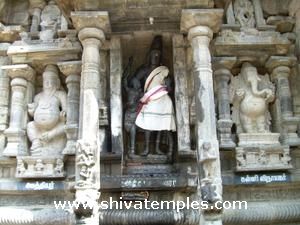
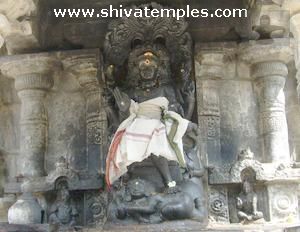
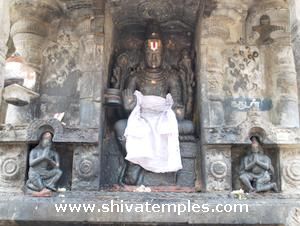
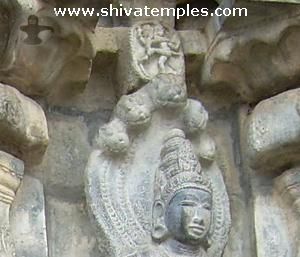
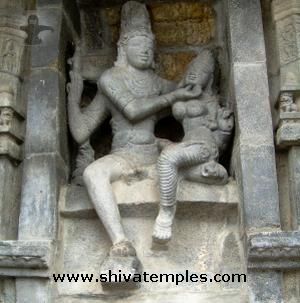
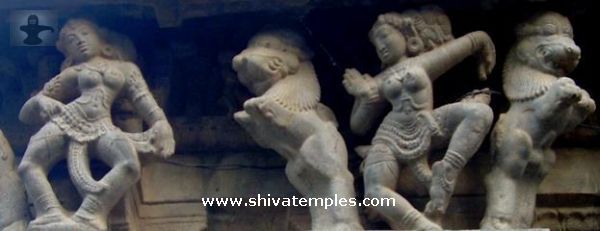
The outer walls of the sanctum are adorned with an extraordinary collection of sculptures that showcase the artistic brilliance of the Chola period. A particularly intriguing feature is the left wheel of the chariot-shaped sanctum, which appears partially buried beneath the ground. This is traditionally believed to symbolize the episode in which Vinayaka pressed down upon Indra’s chariot, preventing him from removing the sanctum from its location. Among the remarkable sculptures is a seated image of MahaVishnu holding a Shiva Linga, accompanied by Andal, Garuda, and Hanuman. Opposite this, stands Muruga with his consorts Valli and Deivanai, a divine tableau celebrated by Arunagirinathar in his Tiruppugazh hymns. The walls are further embellished with exquisite depictions of Gangadhara and Alinganamurthy, each conveying profound theological symbolism. The Vimana above the sanctum contains several unique sculptural representations. Dakshinamurthy is portrayed playing the Veena, an uncommon and captivating form of the deity. Nearby, Brahma is depicted worshipping a Shiva Linga and is flanked by Yama and Chitragupta. The revered sage Patanjali is also represented, with Nataraja shown above him in a graceful dancing posture. On another side of the Vimana, Ardhanareeshwara appears alongside Nandi, symbolizing the inseparable unity of Shiva and Shakti, while below is a serene image of Ranganatha in reclining posture. Perhaps the most celebrated sculpture in the temple is that of Alinganamurthy, an exquisite representation of divine intimacy and cosmic unity. In this rare iconographic form, Goddess Parvati is shown seated lovingly on Shiva’s lap, while Shiva embraces Her affectionately. The sculpture is regarded as one of the finest artistic treasures of the temple and stands as a powerful symbol of the eternal union of Shiva and Shakti.
Special Deities
Rishabha Thandava Murthy
One of the most exceptional treasures of this temple is its rare Utsava Murti of Shiva depicted in the form of Rishabha Thandava Murthy—Shiva performing his majestic cosmic dance while mounted upon Nandi, the sacred bull. The deity is portrayed with ten arms, each bearing symbolic attributes and displaying sacred mudras. Darshan of this unique Rishabha Thandava Murthy is possible only during the auspicious Pradosha period, when special worship and rituals are performed in his honor.
Aravara Vinayaka
A separate sannidhi within the temple is dedicated to Vinayaka, who played a central role in the legends associated with Amirthakadeshwarar and the humbling of Indra’s pride. Here, the deity is worshipped as Aravara Vinayaka, a name that may be interpreted as “Vinayaka who caused a commotion” or “Vinayaka of great uproar.” The epithet commemorates the divine mischief and intervention through which he first seized the pot of Amritha from the devas and later halted Indra’s attempt to remove the sanctum by pressing down the wheel of the chariot. In keeping with these legends, Aravara Vinayaka is portrayed in a distinctive and unusual form. Unlike the serene expressions commonly seen in most Vinayaka shrines, the deity here is depicted with his face turned slightly to one side and bearing an expression of righteous indignation, symbolizing his displeasure at the devas’ and Indra’s failure to accord him the respect due before undertaking important endeavors. This rare iconographic representation serves as a reminder of the importance of humility, devotion, and the traditional practice of invoking Vinayaka before commencing any auspicious act.
Temple Specialities
- An ideal place for celebrating one’s Shashti-Abdha-Poorthy or Sadabishekam.
- The residing deity Kadamba-vana Nathar is revered as a remover of debts.
- Home of the swayambhu murthy Amirthakadeshwarar, bestower of longevity.
- Sani, the planetary deity for Saturn, faces west, seated on an eagle.
- Angaraka worshipped the deity here, making this an ideal place for those afflicted with Sevvai Dosha.
- Extolled by Arunagirinathar in his Tirupugazh.
- A place of worship for those born under the star Sadaya, as this was once a dense forest of kadamba trees.
- Sri Vidhyu Jyothi Nayaki bestows grace as Goddess Saraswathi in the morning, Mahalakshmi in the evening, and ParaShakthi in the night.
- Goddess Durga holding the Conch and Chakra bestows grace as Simha-Vahini and Mahishasura Mardhini.
- Kalabhairavar is to be worshipped on the night of Ashtami.
- It was here that Muruga engaged in penance and received the bow and arrow to conquer the demon Soorapadman.
- The sun’s rays fall on the deity on the 3rd, 4th, and 5th days of the Tamil month of Panguni; during the night of Annabisheka in the Tamil month of Ippasi, the moon’s rays fall on the deity.
- The Dasa-Bhuja Rishabha Thandava Murthy can be glimpsed only during Pradosha.
- Built by Kulothunga Chola I (1100 CE), noted for its architectural splendor.
More Gallery