Thuyaram Theertha Nathar temple, TiruOmampuliyur
Location
Tiru-Omam-Puliyur
Deity
Thuyar-Theertha-Nathar, Pranava-Pureeswarar
Female Deity
Poonkodi-Nayaki, Pushpa-Lathambikai
Pathikam
Sambandar - 1, Tirunavukkarasar - 1
Gallery – Thuyaram-Theerta-Nathar Temple, TiruOmampuliyur


How to Reach
This Shiva temple is located about 30 km from Chidambaram and 7 km from Kattumannarkoil. Regular bus services are available from both Chidambaram and Kattumannarkoil, making the temple easily accessible. Visitors traveling from Chidambaram can take bus route No. 41 via Omampuliyur. The bus stops directly in front of the temple, providing convenient access for devotees and pilgrims.
Temple Address
Omampuliyur
Omampuliyur Post
Kattumannarkoil Taluk
Cuddalore District
PIN – 608306
Temple Hours
Morning : 6:00 AM - 12:00 PM
Evening : 4:00 PM - 7:30 PM
Nearby Paadal Petra Shiva Temples
Temple Legend
The Name – Omam-Puliyur
While residing on Mount Kailash, Goddess Parvati requested Shiva to explain the profound meaning of the Pranava Mantra, “Om.” Shiva consented and began revealing the significance of this primordial sound. However, during the discourse, Parvati's attention wandered, causing Shiva to believe that she was not fully engaged in the sacred teaching. Displeased by this perceived lack of attention, Shiva cursed her to be born on earth in human form. Parvati subsequently arrived at Omampuliyur and, after offering prayers to Goddess Saraswati, undertook intense penance to seek forgiveness and regain Shiva's grace. Seated beneath an Elandai tree, she immersed herself in deep meditation and unwavering devotion to Shiva. Pleased with her sincere penance and steadfast dedication, Shiva appeared before her in the form of Dakshinamurthy and imparted to her the true meaning of the Pranava Mantra, “Om.”
Muruga’s Clandestine Wisdom
To ensure that his sacred teaching remained undisturbed, Shiva instructed his faithful mount, Nandi, to stand guard and prevent anyone from entering. At that moment, Muruga arrived, wishing to be present during the discourse. However, Nandi, faithfully carrying out Shiva’s command, did not permit him to enter. Determined to hear the divine teaching, Muruga assumed the form of a beetle and entered through the Gomukhi—the outlet through which the waters used in the Abhishekam flow from the sanctum. He then settled among the flowers adorning Parvati’s hair and quietly listened as Shiva, in the form of Dakshinamurthy, expounded the profound meaning of the Pranava Mantra, “Om,” to Parvati. Having thus acquired this sacred knowledge, Muruga later revealed the deeper significance of the Pranava Mantra to Shiva himself at Swamimalai, an episode celebrated in Shaivite tradition. It is believed that the name Omampuliyur originated from the divine event in which Uma Devi received the spiritual wisdom and blessing she had sought from Shiva.
The Homam Connection
The term Homam refers to the sacred Vedic fire ritual in which offerings are made into a consecrated fire to invoke divine blessings, purify the surroundings, and promote spiritual well-being. According to the hymns (Pathikams) of Tirunavukkarasar, Omampuliyur was a place where such Homam rituals were performed continuously. He vividly describes the town as being filled with the fragrant smoke arising from the sacrificial fires, creating an atmosphere of holiness and divine grace. In his verses, Tirunavukkarasar directly associates the name Omampuliyur with these perpetual Homam ceremonies, suggesting that the town derived its name from the sacred fire rituals that were constantly conducted there and the aromatic smoke that enveloped the region.
Temple Layout
Entrance & Courtyard
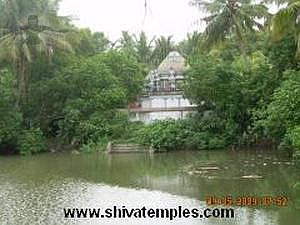
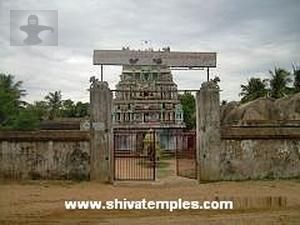
Facing east, the temple is enclosed by protective walls and features a gateway entrance. Opposite the entrance lies the sacred Gauri Theertham, a serene temple tank revered by devotees. Upon entering the temple premises, visitors first come across the Bali Peetam and the Nandi Mandapam, which houses the sacred image of Nandi facing the sanctum. Beyond these stands the majestic three-tiered Rajagopuram, serving as the temple’s principal gateway tower. Inside the temple courtyard, devotees can also worship at the sannidhi dedicated to Arumugha (Muruga).
Sanctum & Presiding Deity
After completing the customary circumambulation of the prakaram, one can proceed to the sanctum, where the presiding deity is enshrined as a Swayambhu Lingam (self-manifested Shiva Linga) upon a lofty square pedestal. The walls of the sanctum are adorned with exquisite sculptures depicting significant episodes from Shaivite tradition. One panel portrays Shiva bestowing the divine Sudarshana Chakra upon Mahavishnu to destroy the demon Chalandaran, while another features the five sacred Shiva Lingas worshipped in the revered Pancha Puliyur Sthalams, highlighting the temple's spiritual connection with these temples
The Two Dakshinamurthys
One of the unique features of this temple is the presence of two separate sannidhis dedicated to Dakshinamurthy, the form of Shiva revered as the Supreme Guru and embodiment of divine wisdom. The first Dakshinamurthy is enshrined in the southern devakoshta of the sanctum and faces south, as is customary. The second is housed in an independent shrine situated between the sanctums of the presiding deity and the Goddess. The presence of these two distinct Dakshinamurthys is a rare and noteworthy feature that sets the Omampuliyur Temple apart from most other Shiva temples.
Other Shrines & Goshta Murthas
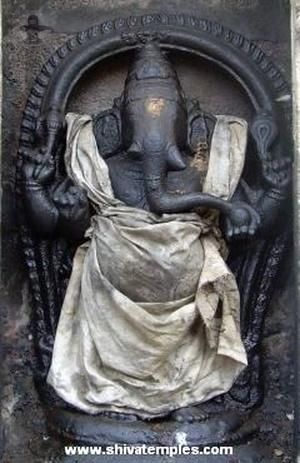
Another distinctive feature of this temple is the stone image of Nataraja enshrined in a niche on the wall surrounding the sanctum. According to temple tradition, this form of Nataraja was revealed to the sage Vyagrapada, one of the foremost saints associated with this temple. The temple's Goshta Murthas also include important deities such as Vinayaka, Lingodbhava, Brahma, and Goddess Durga, all beautifully sculpted and worthy of worship. The sannidhi of the Goddess is especially admired for its grace and architectural beauty, attracting the devotion of countless worshippers. Another notable aspect of the temple is the absence of a separate Navagraha sannidhi, which is commonly found in most South Indian temples. This omission is traditionally attributed to the special prominence accorded to Dakshinamurthy, who is regarded here as the supreme source of wisdom and the presiding authority over planetary influences.
The Five Puliyur Temples
Sage Vyaghrapada, known in Tamil as Pulikkal Munivar (the Sage with Tiger’s Feet), learned of the glory of Nataraja of Thillai from his father, Mathiyanthinar, and came to Chidambaram to worship Nataraja daily. It was his practice to pluck freshly blossomed flowers and offer them to the Deity. However, since bees would drink the nectar in the morning and affect the purity of the flowers, he began collecting them the night before. To help him in this task, Shiva blessed him with the feet of a tiger to climb trees with ease and the eyes of a tiger to carefully examine the flowers in the dark. Thus, he came to be known as Vyaghrapada (in Sanskrit, Vyaghra means tiger), and in Tamil, he was revered as Pulikkal Munivar.
The temples where Vyaghrapada worshipped are collectively known as the Puliyur Temples. They are :-
- Tiru-Erukkattam-Puliyur
- Tiru-Paathiri-Purliyur
- Perum-Patra-Puliyur (Chidambaram)
- Omam-Puliyur
- Tiru-KAnAttu-Puliyur
- Tiru-Perum-Puliyur
Omampuliyur is one of the five sacred Puliyur temples. Of these, Kaanaattam-Puliyur is nearest to this temple. Erukatham-Puliyur and Tirupaadiri-Puliyur are in Nadu Naadu, while Perumpatra Puliyur (Chidambaram), Omam-Puliyur, and Kaanaattam-Puliyur are in North of River Kaveri.
Gauri Theertham & Vada Thali
Omampuliyur has been honored in the devotional hymns of two of the most renowned Nayanars. The 7th century saint Tirugyanasambandhar composed a pathikam in which he refers to this place as “Oma-maam-Puliyur.” Similarly, his contemporary Tirunaavukkarasar composed a pathikam of his own, calling the site “Omampuliyur.” Interestingly, both Nayanars also refer to the site by the name Vada-Thali in their respective works. There is another smaller temple located just across the bank of the Gowri Theertham waterbody that still bears this name.
More Gallery