Soundareswarar Temple, Tirunaraiyur
Location
Tiru-Naraiyur
Deity
Soundareswarar, Siddhi Natheswarar
Female Deity
Thiripurasundari
Pathikam
Tirunavukkarasar - 2, Sambandar - 1
Gallery – Soundareshwar Temple, Tirunaraiyur
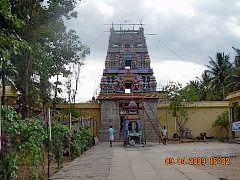
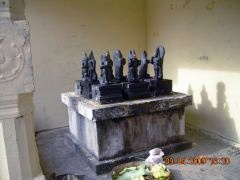

How to Reach
Tirunaaraiyur Temple is located about 19 km from Chidambaram on the Chidambaram–Kattumannarkoil route via Kumaratchi. The temple can be easily reached from the Tirunaaraiyur bus stop, from where a branch road off the main road leads directly to the temple, situated approximately 500 meters away.
Temple Address
Thirunaraiyur
Thirunaraiyur Post
Kattumannarkoil Taluk
Cuddalore District
PIN – 608303
Temple Hours
Morning : 6:00 - 11:30
Evening : 3:30 - 7:30
Nearby Paadal Petra Shiva Temples
Temple Legend
The Gandarva’s Curse
According to legend, a Gandarva once journeying through the heavens accidentally dropped a seed from a fruit he was eating. The seed fell upon the sage Durvasa, who was immersed in deep meditation, disrupting his penance and provoking his wrath. Angered by the disturbance, Durvasa cursed the Gandarva to be reborn as a Naarai (heron), a long-legged wading bird. Seeking forgiveness, the Gandarva pleaded with the sage for a way to redeem himself. Moved by his remorse, Durvasa instructed him to worship God Shiva at this site by performing daily Abisheka to the Shiva Linga with water brought from the River Ganges at Varanasi. Obeying the sage's command with unwavering devotion, the bird flew to the Ganges each day, carried the sacred water in its beak, and offered it to the deity. Pleased with this sincere act of penance, Shiva eventually restored the Gandarva to his celestial form. The place where this divine redemption took place came to be known as Naaraiyur, deriving its name from the Naarai bird associated with the legend.
Karunya Theertham
During one of its daily journeys back from the Ganges, the Naarai was caught in a fierce storm. Battling strong winds and torrential rain, the devoted bird struggled to continue its mission. In the midst of the tempest, a few of its feathers were torn away by the gale, and some of the holy Ganges water it carried in its beak spilled onto the ground, creating a sacred pond. This pond came to be known as Karunya Theertham and is situated near the temple. Tradition further holds that the spot where the bird's feathers fell is located about three kilometers from Tirunaaraiyur and is known as Siragu-Izhanda-Nallur, meaning “the place where the wings were shed.” This sacred site is home to the revered Gyanapureeswarar Temple, a celebrated Thevara Vaippu Thalam praised in the sacred Thevaram hymns.
Polla Pillayar
The Self-Manifested Vinayaka
Although the temple is dedicated to Shiva, it is widely renowned as the Polla Pillayar Temple, owing to the presence of the famous Polla Pillayar within its precincts. The name Polla Pillayar means “the Ganesha who was not chiseled,” signifying that the deity is a Swayambhu Murti—a self-manifested form that was not sculpted by human hands. According to temple tradition, a devout worshipper named Ananthesar performed daily puja to Vinayaka and would distribute the consecrated prasadam to fellow devotees before returning home. When his young son, Nambi Andar Nambi, asked why no prasadam was brought home, Ananthesar would lovingly reply that Vinayaka had consumed it all. One day, while Ananthesar was away, he entrusted the worship of the deity to his son. Nambi faithfully performed the puja and offered naivedya to the deity, eagerly waiting for the deity to accept it. When the offerings remained untouched, the young boy became distressed and, in his earnest devotion, struck his head against the idol, pleading with Vinayaka to partake of the food. Moved by the child's unwavering faith and innocence, Vinayaka is said to have manifested before him and consumed the offerings, revealing the profound power of sincere devotion and divine grace.
Preservation of the Tirumurai
The preservation of the Tirumurai, the sacred compendium of Tamil Shaivite devotional hymns, is closely associated with the grace of Polla Pillayar. During the reign of the great Chola monarch Rajaraja Chola I, efforts were undertaken to recover the long-lost Thevaram hymns composed by the saint-poets Tirunavukkarasar, Tirugnanasambandar, and Sundarar. However, the whereabouts of the ancient palm-leaf manuscripts remained unknown. The king sought the help of the eminent scholar-saint Nambi Andar Nambi, who prayed fervently to Vinayaka for guidance. In response, a divine voice revealed that the treasured manuscripts were preserved within the precincts of Chidambaram Nataraja Temple, concealed in a mandapa located in the temple’s south-western corner. Acting upon this revelation, the sacred hymns were recovered and subsequently compiled, ensuring their transmission to future generations. In remembrance of this divine intervention, the Vinayaka situated in the western inner prakaram of the Chidambaram temple is revered as the deity who guided the rediscovery and preservation of these invaluable Shaivite scriptures.
Following the divine revelation, King Rajaraja Chola I and Nambi Andar Nambi traveled to Chidambaram Nataraja Temple, where they discovered the long-lost palm-leaf manuscripts preserved within a snake-infested chamber. Nambi carefully collected and organized the recovered hymns into seven volumes, laying the foundation for what would later become the Tirumurai. Since these sacred verses were intended to be sung, the king and Nambi sought divine guidance from Shiva at Erukathampuliyur Temple regarding the appropriate musical modes for rendering them. In response, they received a divine command that Paathini, a woman descended from the lineage of the revered Tiruneelakanta Yazhpanar, had been destined to restore the musical tradition of the hymns. She was accordingly brought to Chidambaram, where, before an assembly of learned scholars and devotees, she expertly assigned the appropriate Pann (ancient Tamil musical mode) to each hymn, thereby restoring the Tirumurai to its original musical glory. In recognition of their invaluable contributions to the preservation of Tamil Shaivite literature, statues of Rajaraja Chola and Nambi Andar Nambi have been installed opposite the sanctum of Polla Pillayar, commemorating their enduring legacy in safeguarding and reviving the sacred Tirumurai tradition.
Arupadai Veedu of Vinayaka
The six sacred abodes (Arupadai Veedu) of Vinayaka:
- Tirumudukundram
- Tirvannamalai
- Tirunarayur
- Tirukadayur
- Pillayar Patti
- Uchi Pillayar, Tiruchi
Just as the six Arupadai Veedu are celebrated as the sacred abodes of Muruga, Vinayaka too has his own six padai veedu. Tirunaaraiyur’s Polla Pillayar holds the distinction of being the first padai veedu of Vinayaka.
Temple Layout
Entrance & Gopuram
Spread across approximately 5.5 acres, the Soundareshwarar Temple is an imposing and historically significant one. The sacred Karunya Theertham lies just outside the eastern entrance, adding to the tranquil atmosphere of the temple complex. Upon entering, devotees first encounter a sannidhi for Vinayaka, followed by a mandapam housing Nandi, the divine mount of Shiva. One distinctive feature of the temple is the absence of the customary Dwajasthambam (flagstaff), which is found in most South Indian temples. Dominating the temple skyline is the magnificent three-tiered Rajagopuram, rising to a height of about 78 feet and serving as a striking architectural landmark. The presiding deity, Soundareshwarar, is enshrined in the form of an east-facing Shiva Linga. As the deity is believed to be self-manifested (Swayambhu), He is also venerated as Suyam-Prakasha Eeshwarar, “the Self-Resplendent One.”
Prakaram Shrines
A circumambulation of the central sanctum reveals several important sannidhis situated throughout the temple precincts. In the western prakaram stands the sannidhi of Subramanya, while Goddess Gajalakshmi is enshrined in the north-western corner. Along the northern side are the sannidhis of Tirumoolanathar and Chandikeshwarar, together with the sacred Sthala Vruksham, the venerable Punnai tree. In the north-eastern section, devotees can offer worship to Sri Bhairavar, Surya, Chandra, and the Navagrahas. The Goshta Murthis adorning the walls of the main sanctum include Vinayaka, Dakshinamurthy, Lingothbhavar, Brahma, and Goddess Durga. The divine consort of Soundareshwarar, Goddess Tripurasundari, is enshrined in a separate south-facing sanctum located within the north-eastern outer prakaram, where she bestows her grace upon devotees.
Rare & Unique Features
Among the temple’s most remarkable architectural features is the unique crescent moon-shaped Vimana that rises above the sanctum of Soundareshwarar. Crowning the Vimana are two Kalashas, a rare and symbolic arrangement believed to represent the divine union of Shiva and Shakti. The temple also houses a dedicated sannidhi for Nataraja, further enhancing its spiritual significance and its association with Shaivite worship traditions. Another unusual feature of the temple is the presence of twin Chandikeshwarar situated side by side—one associated with Soundareshwarar and the other with Tirumoolanathar. Such an arrangement is seldom found in Shiva temples. The Prakaram also enshrines three Bhairavars together in a single location, and devotees consider their darshan to be particularly auspicious, believing it bestows protection, prosperity, and spiritual blessings.
Festivals & Worship
A number of important festivals are celebrated with great devotion at the temple, including Sankatahara Chaturthi, Vinayaka Chaturthi, Krittikai, Skanda Shashti, Pradosham, and Maha Shivaratri. Among the most significant annual observances is the Nambi Guru Puja and Tirumurai Festival, conducted during the Tamil month of Vaikasi on the day of the Punarvasu (Punarpoosam) star. This festival commemorates the mukthi (liberation) attained by the revered saint-scholar Nambi Andar Nambi, whose efforts were instrumental in preserving and compiling the sacred Tirumurai hymns. The temple holds a distinguished place, having been glorified in the Thevaram hymns of the great Nayanmar saints Tirugnanasambandar and Tirunavukkarasar. Their devotional Pathikams in praise of the deity of Tirunaaraiyur have secured the temple’s status as one of the revered Paadal Petra temples.
More Gallery


